Yellowstone National Park: Quick Facts Every Winter Visitor Should Know
Verified Yellowstone quick facts for winter visitors: size, geysers, wildlife, winter road access, weather and crowd figures, plus what each number means for a snowmobile trip.
Yellowstone National Park: Quick Facts Every Winter Visitor Should Know
Yellowstone became the world's first national park on March 1, 1872, when President Ulysses S. Grant signed the protecting act. It spans 3,472 square miles across Wyoming, Montana and Idaho, holds more than 10,000 hydrothermal features including over 500 active geysers, and in winter swaps car traffic for guided snowmobile and snowcoach travel from mid-December to mid-March. If you're still unsure how to reach this remote corner of the Rockies, our guide to Yellowstone's exact location and access routes covers every approach in detail.
Those numbers shape every winter decision in the park. A place this size, sitting on an active volcanic caldera roughly 45 by 30 miles, cannot be seen in a day, and in winter most of it cannot be reached by car at all. This page pulls the verified basics into one place, the same research that sits behind the winter reporting on Yellowstone Snowmobile Tours, so a traveler comparing a guided snowmobile tour against a heated snowcoach tour starts from real figures rather than park folklore.
Winter is the season that rewrites the rules. Interior roads close to regular vehicles, oversnow travel opens from mid-December to mid-March, and the only way to Old Faithful or the Grand Canyon of the Yellowstone is a commercially guided trip or a hard-to-get lottery permit. The quick facts below set the stage. The sections that follow explain what each number means for an actual itinerary.
| Fact | Figure |
|---|---|
| Established | March 1, 1872, world's first national park |
| Size | 3,472 square miles, or 2,221,766 acres |
| State split | About 96 percent Wyoming, 3 percent Montana, 1 percent Idaho |
| Highest point | Eagle Peak, 11,358 feet |
| Lowest point | Reese Creek, 5,282 feet |
| Hydrothermal features | More than 10,000 |
| Active geysers | More than 500, over half the world's total |
| Yellowstone Lake | Largest high-elevation lake in North America, at 7,733 feet |
| Caldera | Roughly 45 by 30 miles |
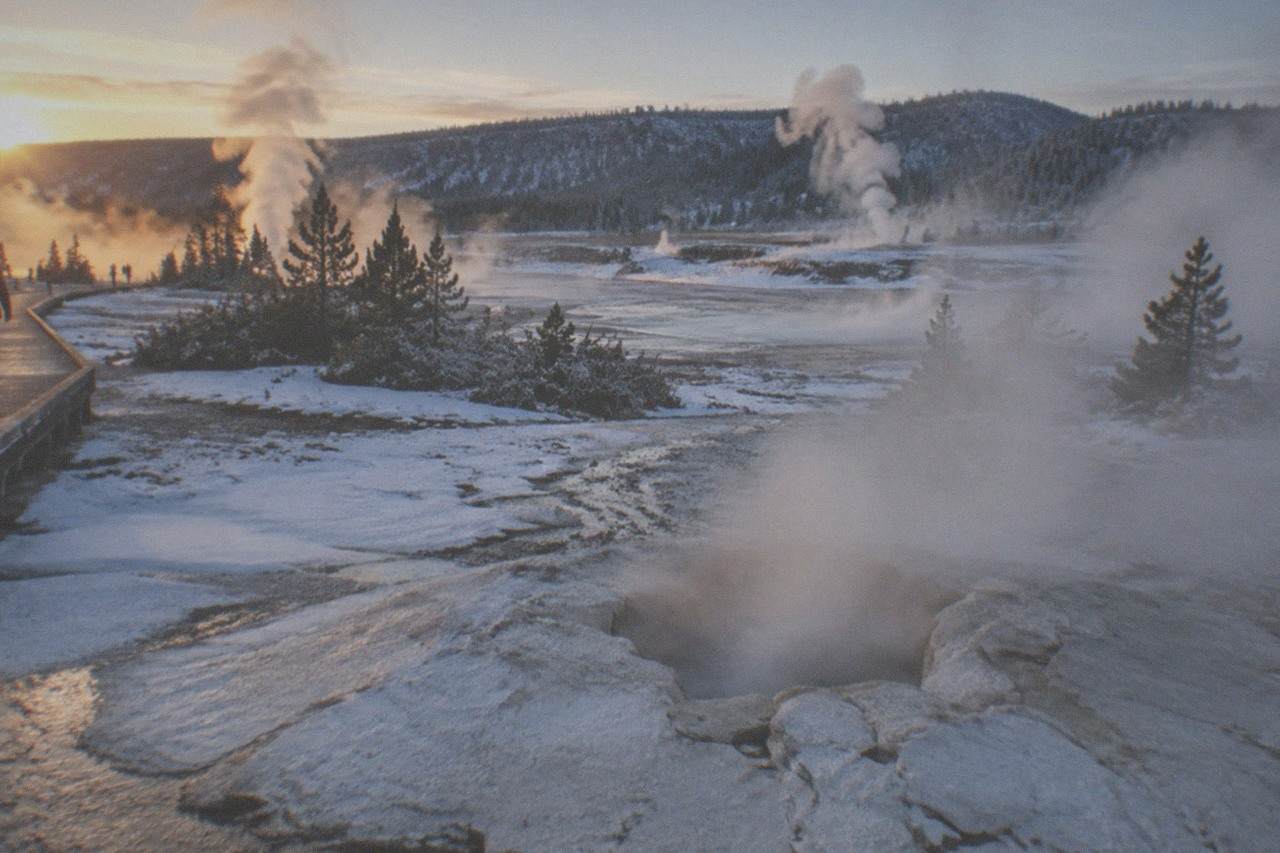
Read the table as a planning baseline rather than trivia. The elevation spread alone, more than 6,000 feet between Eagle Peak and Reese Creek, explains why a single winter day can start in valley fog and end in hard blue sunshine. The hydrothermal count explains why the park grooms boardwalks all season, and the calendar explains why winter visitors so often have those boardwalks to themselves.
Why Is Winter Access Different In Yellowstone?
Most Yellowstone interior roads close to regular vehicles in early November and stay closed until late April. From mid-December to mid-March the only wheeled route open is the Gardiner to Cooke City road, and travel to Old Faithful or the Grand Canyon of the Yellowstone requires a commercially guided snowmobile or snowcoach tour, or a lottery permit.
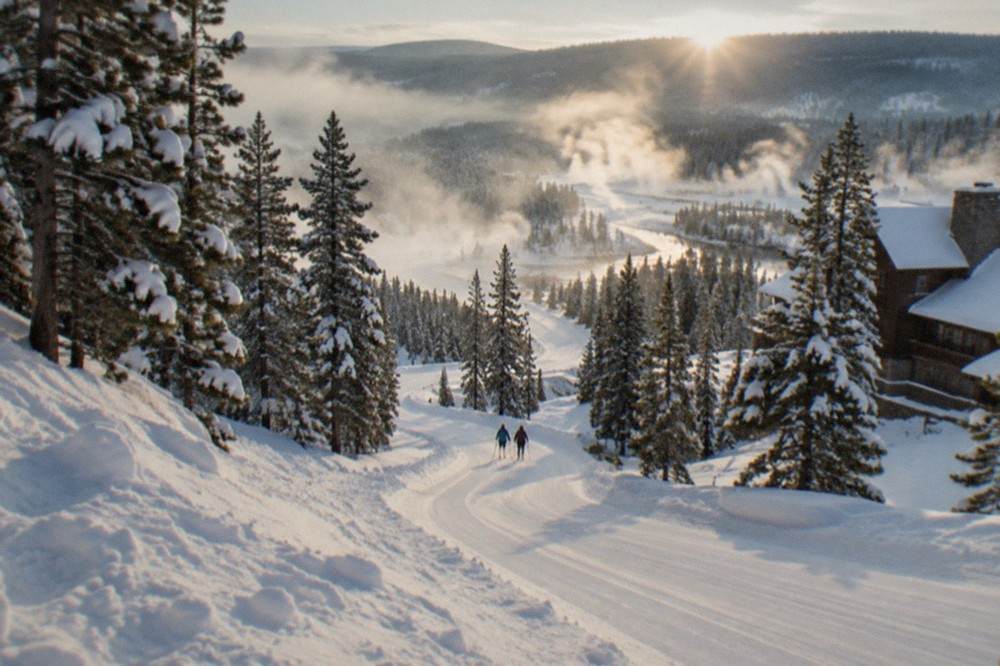
The road system is the single fact that surprises most first-time winter visitors. NPS road status reporting confirms the pattern every year: cars leave the interior in early November, snow accumulates, and the groomed oversnow network takes over in mid-December. For the 2026-27 season the projected opening is December 15, 2026, with the West, South and East entrances and the remaining groomed roads closing March 15, 2027, and some segments, such as Mammoth Hot Springs to Norris, closing as early as March 7. The projected dates move with snowpack, so the standing mid-December to mid-March rule is the safe planning frame.
The second fact is the guide requirement. Unguided snowmobiling inside Yellowstone is prohibited under the 2013 Winter Use Rule, still in effect for 2026-27. A rider enters the park interior on a commercially guided snowmobile tour or snowcoach tour, or through the Non-Commercially Guided Snowmobile Access Program, a lottery that admits four small groups per day. Every machine must meet the park's Best Available Technology standard for sound and emissions, which commercial operators handle for you since their fleets are certified by definition. If the lottery route tempts you, the Yellowstone snowmobile season dates guide tracks the full winter calendar alongside these rules.
| Access question | Winter answer |
|---|---|
| Can I drive to Old Faithful? | No. Interior roads are oversnow-only from mid-December to mid-March, reached by guided snowmobile or snowcoach |
| Which road stays open to cars? | North Entrance at Gardiner to Northeast Entrance at Cooke City, via Mammoth, Tower and Lamar Valley, year-round |
| Can I ride my own snowmobile? | Only with a commercial guide or a Non-Commercially Guided Snowmobile Access Program lottery permit |
| When does oversnow travel run? | Projected December 15, 2026 through March 15, 2027, with some segments closing in early March |
| What are the daily travel hours? | 7 a.m. to 9 p.m., with East and South entrances opening at 8 a.m. |
Entrance fees follow the same structure as summer. A standard 7-day pass runs $35 per private vehicle or $20 per person entering on foot, and non-US residents aged 16 and over pay an additional $100 per person unless they hold a qualifying annual pass. Children under 16 enter free. Tour pricing is separate from the pass, so budget for both.
For most winter visitors the simplest route into the interior is a guided trip from the Jackson area. Scenic Safaris, the authorized operator behind the in-park tours out of Jackson, picks up at Jackson-area hotels and enters through the South Entrance, roughly 60 miles north of town. Its winter-only products do pause outside the season, so confirm current availability when you book.
How Big Is Yellowstone And Where Is It?
Yellowstone covers 3,472 square miles, or 2,221,766 acres, roughly 63 air miles north to south and 54 east to west. About 96 percent sits in Wyoming, 3 percent in Montana and 1 percent in Idaho. Eagle Peak, the high point, reaches 11,358 feet; Reese Creek, the low point, sits at 5,282 feet.
Scale is the fact people most often underestimate. The park is larger than Rhode Island and Delaware combined, and the drive between far-flung features eats real hours even in summer. In winter the distances matter more, not less: a full-day guided snowmobile tour from the South Entrance to Old Faithful and back is a 10-to-12-hour day precisely because the park is this big. The official park facts page carries the same numbers, along with a detail few sites mention: the National Park Service notes its own acreage figures are still subject to ongoing scientific verification, a rare admission that even the baseline is measured, not guessed.
The geography explains the winter experience. The caldera, the collapsed mouth of the volcano beneath the park, spans about 45 by 30 miles and holds the geyser basins that stay steaming through the coldest weeks. Yellowstone Lake, the largest high-elevation lake in North America at 7,733 feet, freezes over and becomes a white plain ringed by mountains. The state split matters for trip logistics: almost every winter gateway town used by snowmobilers, Jackson, West Yellowstone and Gardiner among them, sits on the Wyoming or Montana edges rather than deep inside the Idaho sliver.
Elevation also drives the weather gradient a rider feels in a single day. Departure points around Jackson sit near 6,000 feet, and park interiors climb from there toward the passes. Cold, snow texture and wind all shift with the terrain, which is one reason commercial guides set the pace and the routing rather than letting groups wander.
When Was Yellowstone Established?
President Ulysses S. Grant signed the Yellowstone National Park Protection Act on March 1, 1872, creating the world's first national park. The idea was new enough that no template existed; Congress set the land aside largely to protect its geothermal wonders and wildlife, and the park now anchors a global movement it predates by decades.
The founding date is not just trivia for a plaque. It is the reason winter access works the way it does. Because the land was protected before development, the interior never grew a road network built for year-round cars, and the winter closure of most interior roads is a direct consequence. The park's own establishment history traces the act through the expeditions that mapped the geysers and the lobbying that persuaded Congress the wonders should not be sold off lot by lot.
The protection idea also shaped the wildlife story below. Wolves, bison and elk persisted in the park because the habitat was never converted, and today's winter wildlife watching along the groomed corridors is a living artifact of the 1872 decision. For a winter visitor, the practical takeaway is patience: this is a park managed for preservation first, which is why guides, permits and groomed roads govern every oversnow mile.
How Many Geysers Does Yellowstone Have?
Yellowstone holds more than 10,000 hydrothermal features, and more than 500 of them are active geysers, over half the estimated total on Earth. Old Faithful remains the schedule keeper: the National Park Service reports a median interval of 102 minutes, give or take ten, which works out to roughly 17 eruptions a day, winter included.
No other place on the planet concentrates geysers like this. The count of active geysers, over 500, represents more than half the world's total, and the broader hydrothermal inventory, hot springs, mudpots and fumaroles included, tops 10,000 features. Winter is arguably the best season to see them. Sub-zero air turns every vent into a steam column, and the boardwalks around the Upper Geyser Basin are groomed and nearly empty. The NPS Old Faithful page tracks the eruption statistics, including the lengthening intervals recorded over recent decades.
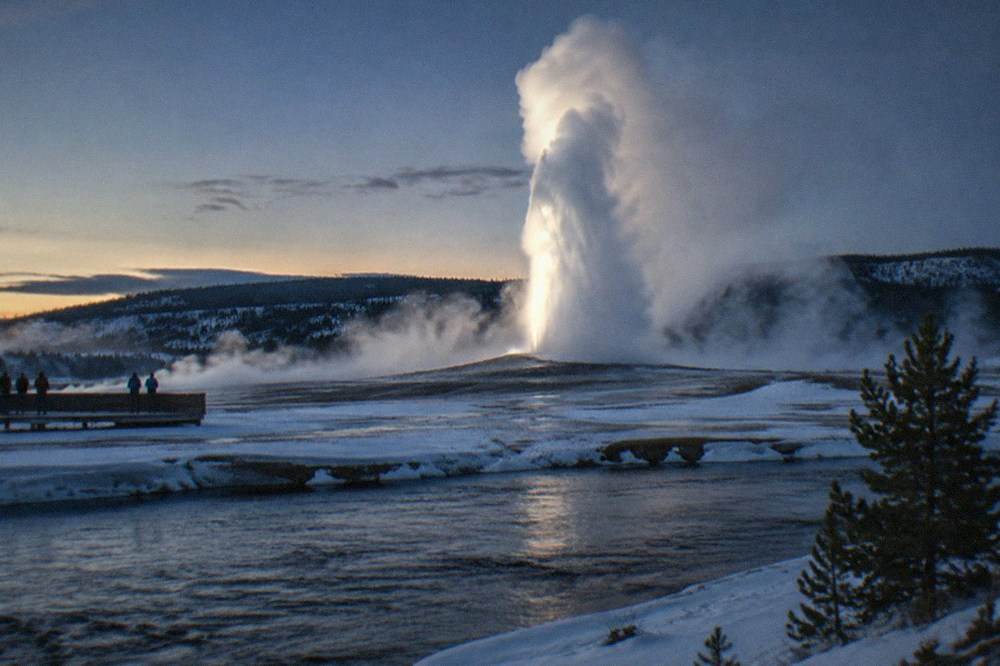
That predictability is why full-day tours can plan around an eruption. Riders on the Old Faithful snowmobile tour from Jackson Hole typically reach the Upper Geyser Basin with time to spare for the next predicted window, watch the eruption against the snow, and ride out via stops such as West Thumb and Moose Falls. The specifics from the roster: the Yellowstone Old Faithful Full-Day Snowmobile Tour from Jackson Hole runs roughly 10 to 12 hours, is rated 4.6 across 338 reviews, starts from $475, and departs with hotel pickup in the Jackson area before entering through the South Entrance.
Two sibling products cover the same winter-only window. A heated snowcoach tour to Old Faithful, from $450 and rated 4.8 across 227 reviews, suits travelers who want the interior without riding a sled, and a full-day Grand Canyon of the Yellowstone snowmobile tour, roughly 12 hours with an early Jackson pickup, targets the canyon and its frozen falls instead, with a review pool that is small at 13 reviews. Both are winter-only products, so check current availability when planning.
If you want the eruption question answered in detail, the sister piece on watching Old Faithful erupt in winter breaks down timing, viewing spots and what a tour schedule does around the interval.
What Wildlife Can You See In A Yellowstone Winter?
Winter wildlife watching in Yellowstone centers on bison, elk, bighorn sheep and wolves, plus coyotes, foxes, otters, trumpeter swans and eagles against the snow. A January 2026 park update put the wolf population under 84 animals, with the Wapiti Lake pack at 18 or more in the Hayden Valley area and Rescue Creek near 16 around Blacktail Plateau.
Winter is the best wildlife season of the year, and the reason is simple: snow. Dark animals against white ground are visible at enormous distances, and many species concentrate in the valleys and thermal areas where food stays reachable. Bison use the groomed roads themselves, plowing through snow with their heads, and elk gather near the sheltered corridors. Swans hold open water along the rivers, and ravens and eagles follow the herds. A guided snowmobile tour along the Firehole or through Hayden Valley passes more large mammals in a day than most summer visitors see in a week.
The wolf numbers carry their own story. The January 2026 update reported the park population under 84 animals, with the Wapiti Lake pack numbering 18 or more around Hayden Valley and the Firehole area, and the Rescue Creek pack near 16 on the Blacktail Plateau. Elk make up roughly 60 percent of wolf kills in the park and bison about 16 percent, so the predators stay close to the herds a winter rider is also watching. Sightings are never promised, and guides never chase them, but the odds in the interior valleys are as good as anywhere in the Lower 48.
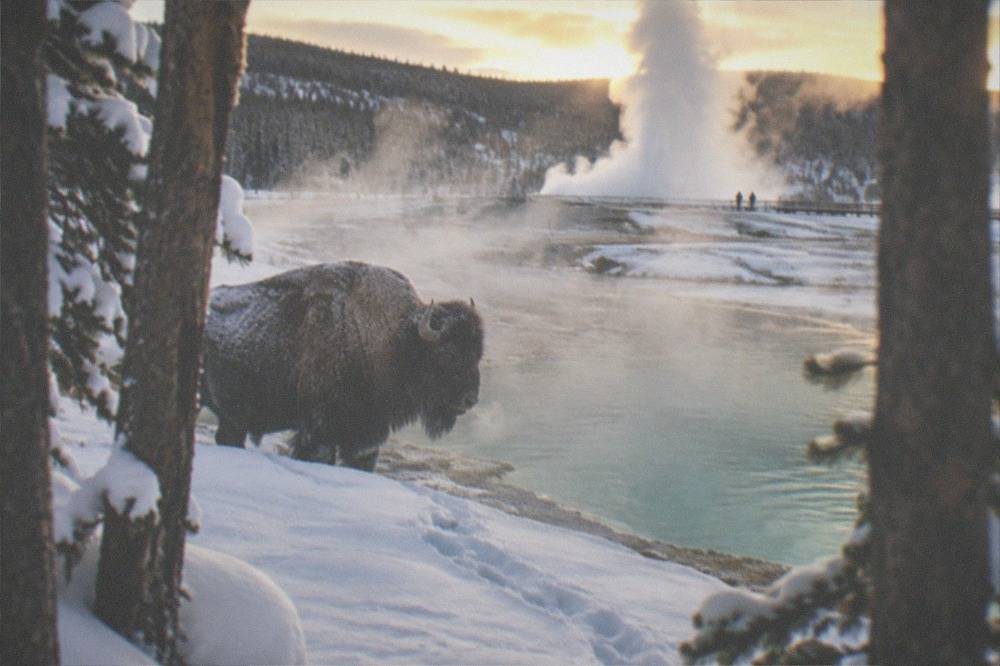
Distance is the rule that keeps this working. Winter animals are stressed and calorie-poor, so operators keep sleds moving and viewers in place, and the National Park Service winter guidance repeats the same message the summer rules do: give wildlife room. Bison in particular use the roads because travel is easier there, which means encounters happen at tour speed rather than on foot.
How Cold And Crowded Is Yellowstone In Winter?
Winter daytime temperatures usually run 0 to 20 degrees Fahrenheit, with average highs of 20 to 30 and lows of 0 to 9, and sub-zero nights are common at elevation. Crowds are the opposite: January averages about 28,837 visits, February about 33,088 and March about 22,266, against July peaks above 900,000, so winter visitors get the park close to themselves.
The cold is real but manageable with the right layers, and it is the price of the solitude. The all-time record low, minus 66 degrees Fahrenheit at the Riverside Ranger Station on February 9, 1933, is the extreme, not the expectation. Average winter highs run 20 to 30 degrees, average lows 0 to 9, and daytime readings often sit between zero and 20. Wind chill on a moving sled is the number that actually matters, which is why commercial operators supply insulated suits, helmets and boots, and why the sister guide on how cold Yellowstone gets in winter is worth reading before you pack.
| Month | Average visits |
|---|---|
| January | About 28,837 |
| February | About 33,088 |
| March | About 22,266 |
| November | About 14,000 |
| December | About 20,000 |
Those figures are National Park Service historical averages, and the contrast with July, which peaks above 900,000 visits, tells the whole story. Winter months each account for under one percent of annual visitation. In practical terms, the boardwalks at Old Faithful that jam with selfie lines in July are quiet enough in January to hear the ice crack on the Yellowstone River. Solitude is not a marketing line here, it is arithmetic.
Trip length follows from the same arithmetic. Planning sources generally suggest at least three full days for a first winter visit, with four or five for a relaxed pace, because oversnow days start early, run long and depend on weather windows. Pairing one interior day with near-park riding is a common pattern. Heart Six Snowmobiling in Jackson Hole, for example, runs a roughly four-hour guided snowmobile tour in the Bridger-Teton National Forest, outside the park, from $360, rated 4.8 across 50 reviews, meeting at the Buffalo Valley Cafe in Moran. It is a different product from an in-park Yellowstone day, but it extends a winter trip with more seat time and no lottery odds.
The short version of every fact on this page: a huge, cold, nearly empty volcanic park, reachable in winter only by guided oversnow travel, packed with steam and wildlife. Bring three days, a serious base layer and a booking made before the snow flies, and the numbers start working for you instead of against you.
Common Questions About Yellowstone National Park Quick Facts
Yellowstone National Park: Quick Facts Every Winter Visitor Should Know
Yellowstone is the world's first national park, established March 1, 1872. It spans 3,472 square miles across Wyoming, Montana and Idaho, holds more than 10,000 hydrothermal features and over 500 active geysers, and in winter its interior is reachable only by guided snowmobile or snowcoach travel from mid-December to mid-March.
Do you need a guide to snowmobile in Yellowstone?
Yes. Unguided snowmobiling inside the park is prohibited. You enter on a commercially guided tour or through the Non-Commercially Guided Snowmobile Access Program, a lottery that admits four small groups per day with permits costing $40 per day plus a $6 application fee.
Can you drive to Old Faithful in winter?
No. Interior roads close to regular vehicles from early November until late April. From mid-December to mid-March, Old Faithful is reachable only by guided snowmobile or snowcoach tour, or by a non-commercial lottery permit group.
How cold does Yellowstone get in winter?
Average winter highs run 20 to 30 degrees Fahrenheit and average lows 0 to 9, with daytime readings often between zero and 20 and sub-zero nights common at elevation. The record low is minus 66 degrees, set at the Riverside Ranger Station on February 9, 1933.
How many geysers does Yellowstone have?
More than 500 active geysers, over half the world's estimated total, within an inventory of more than 10,000 hydrothermal features. Old Faithful erupts on a median interval of 102 minutes, roughly 17 eruptions per day.
How crowded is Yellowstone in winter?
Very lightly visited. National Park Service averages show about 28,837 visits in January, 33,088 in February and 22,266 in March, each under one percent of annual visitation, against July peaks above 900,000.