Yellowstone Snowmobile Tour Packing List
What to pack, wear, and leave behind for a guided Yellowstone snowmobile tour, from base layers and wool socks to day-bag essentials and cold-weather gear.
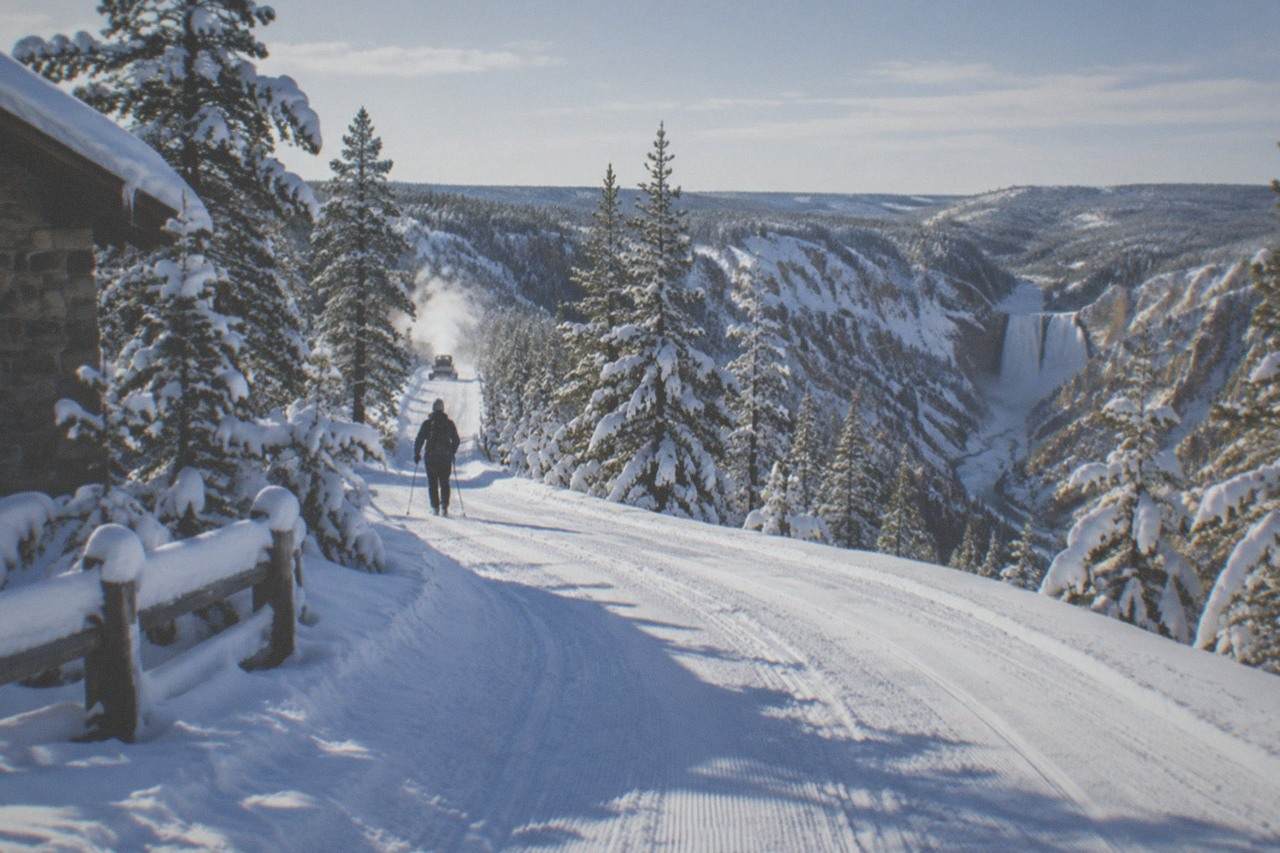
Yellowstone Snowmobile Tour Packing List
A guided snowmobile tour in Yellowstone supplies the machine, a full-face helmet, an insulated suit, boots, and mittens, so your packing job is the layers underneath and the small items that fail in the cold. Plan for winter daytime temperatures of zero to 20 degrees Fahrenheit, plus wind chill on a moving sled. The list below is built for exactly that. It follows the same gear logic the National Park Service publishes for winter oversnow travel, adapted for riders who booked a commercial tour rather than a self-guided permit trip. NPS gear guidance for oversnow travelers recommends an insulated snowmobile suit, helmet with face shield, goggles, insulated gloves and boots, wool or synthetic socks, a moisture-wicking base layer, insulating mid-layers, and a balaclava or neck gaiter. A commercial guided snowmobile tour covers most of that outer list for you.
That changes the packing problem in a helpful way. You are not outfitting an expedition. You are filling the gaps under and around gear the operator already hands you, and choosing the few personal items that make a ten hour winter day pleasant instead of survivable. Riders on this route commonly describe the day as the coldest hour and the warmest hour happening within the same afternoon, depending on whether the sled is moving or stopped at a geyser basin.
There is a planning payoff too. People who arrive with the right base layers, the right socks, and a sensible day bag spend the morning outfitting session actually listening to the safety briefing instead of negotiating for loaner gloves. For a sense of how the day unfolds from hotel pickup to the South Entrance, the write-up on what happens on a snowmobile tour walks through the hour by hour. This site, Yellowstone Snowmobile Tours, covers the same ground from the packing side.
One distinction matters before the list. Tours that actually enter Yellowstone's interior, like the Scenic Safaris Old Faithful trip from Jackson Hole, run a long day in deep cold. Shorter rides in the Jackson Hole area, such as the Heart Six trip out of Buffalo Valley or the Turpin Meadow tour, stay outside the park in the Bridger-Teton National Forest but see the same temperatures. Pack for the cold, not for the map.
What Your Tour Operator Provides And What You Bring
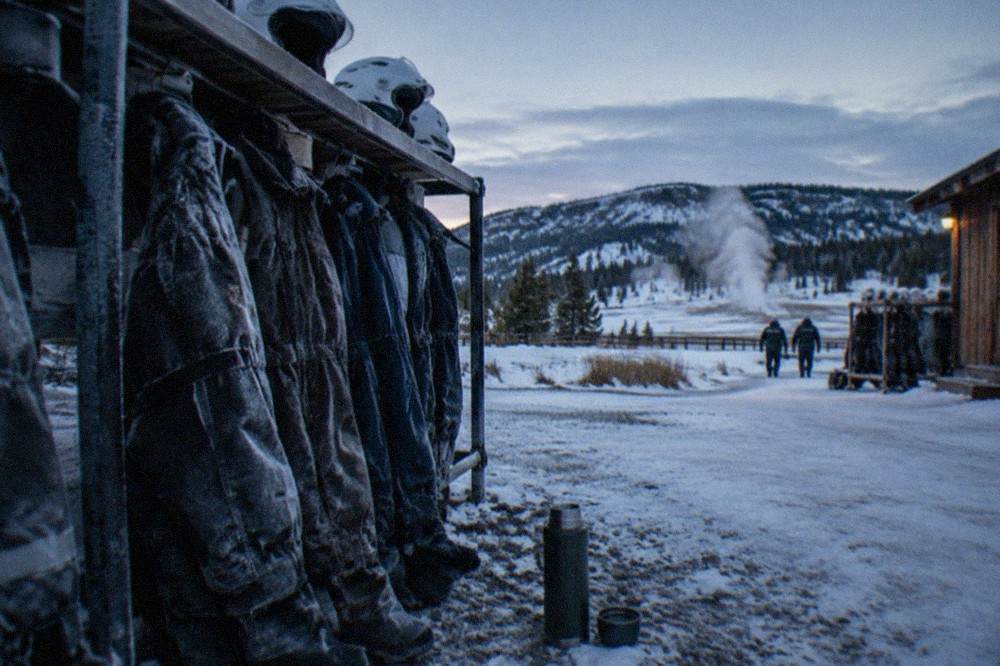
Most commercial snowmobile tour operators in the Jackson Hole region provide the outer shell: a two-piece insulated snowmobile suit, snow boots with removable liners, a full-face helmet, and leather mittens. You bring everything worn underneath, plus personal items like goggles, a neck gaiter, glove liners, and sunglasses. The exact split varies slightly by operator, and winter-only products sometimes change their inclusions between seasons, so the live listing for your specific tour is the final word on what is supplied. As a general rule for guided snowmobile tours on these routes, if it is bulky, windproof, or machine-specific, the operator provides it. If it touches your skin or goes in a pocket, you bring it. Once your packing is sorted, you might want to plan how you'll spend the rest of your trip, and our guide to free winter activities around Jackson Hole has plenty of ideas that won't add to your gear pile.
The guided in-park tours show exactly how this works in practice. The Old Faithful full-day snowmobile tour from Jackson Hole, rated 4.6 across 338 reviews and priced from $475, includes hotel pickup in the Jackson area and a roughly 10 to 12 hour day. Operators on this route typically run a 6:00 to 7:30 a.m. pickup, van the group about 60 miles to the South Entrance, and have riders on the trail by roughly 8:00 to 9:30 a.m. That early start is the real reason the packing list matters: you dress at dawn, at the coldest point of the day, in clothes you brought yourself.
| Item | Usually provided by the operator | Usually yours to bring |
|---|---|---|
| Snowmobile and fuel | Yes | No |
| Full-face helmet | Yes | Helmet liner or balaclava underneath |
| Insulated two-piece suit | Yes | Base layer and mid-layers worn under it |
| Snow boots | Often, with removable liners | Heavy wool socks |
| Mittens | Often, leather outer mittens | Glove liners for under the mittens |
| Goggles | Sometimes loaners, not guaranteed | Your own goggles or wraparound sunglasses |
| Lunch and snacks | Often included on full-day tours | Extra high-energy snacks and water |
| Hand warmers | Sometimes sold on site | Your own chemical heat packs |
Two gaps catch riders out most often. The first is eye protection. Loaner goggles exist on some tours but are not promised on every listing, and a face shield alone does not block the wind funnel that develops behind a windshield at speed. Bring goggles, full stop. The second is the under-layer. The suit is warm, but the suit is only as good as what is under it, and that is entirely yours. If you want the same comparison from a meeting-point angle, where snowmobile tours actually meet explains the pickup logistics by gateway town, which shapes how much you can leave in the van.
The Old Faithful snowmobile tour is the flagship example, and the one to measure against when you check your listing's inclusions. Check availability beside the full-day Old Faithful snowmobile tour page if you want to confirm what this season's listing includes.
The Layering System That Works Under The Suit
Use a three-layer system: a moisture-wicking synthetic or wool base layer, an insulating wool, fleece, or down mid-layer, and the operator's windproof outer suit. Cotton is the one fabric to avoid because it holds sweat and loses insulation value when damp. One pair of heavy wool socks outperforms two thin pairs. The three-layer logic comes straight from official winter guidance, which stresses windproof hooded outer layers over wool or synthetic insulation and wool socks with gaiters and insulated boots. The National Park Service winter safety page states the underlying principle plainly: avoid cotton, cover every bit of skin, and plan for temperatures and wind chills far below what the parking-lot thermometer reads.
The base layer is where money is well spent. A snug synthetic or merino wool long-sleeve top and matching bottoms wick sweat away from skin during the riding hours, and sweat is the hidden enemy of a snowmobile day. Riders work harder than they expect: unloading at the entrance, mounting and dismounting the sled, walking boardwalks at geyser basins. A damp cotton t-shirt under a $400 borrowed suit feels like a wet towel by lunch. Wool or synthetic does not.
Mid-layers should be flexible rather than maximum. A midweight fleece or a light down jacket you can unzip in the van and zip up at the trailhead covers the whole day. You will be warmer than you think while riding and colder than you think while standing still at Old Faithful waiting on an eruption, so the ability to adjust matters more than raw thickness. For a deeper treatment of the clothing side, the guide on what to wear snowmobiling in Yellowstone expands each layer with options.
| Layer | What works | What fails |
|---|---|---|
| Base | Merino wool or synthetic wicking top and bottom | Cotton t-shirts and jeans |
| Mid | Midweight fleece or light down jacket | Thick cotton hoodies |
| Socks | One pair of heavy wool socks | Two pairs of thin socks, cotton anything |
| Head | Balaclava or neck gaiter plus helmet liner | Scarves that can unravel near a track |
| Eyes | Goggles or wraparound sunglasses | Fashion sunglasses that vent wind |
Feet deserve one specific warning because it is the most common mistake on the list. Two pairs of socks sounds warmer but actually traps circulation and compresses inside a snow boot, leaving toes colder than one thick wool pair would be. Boots with removable liners, the kind operators hand out, are designed around a single substantial sock. Trust that design.
What To Pack In Your Day Bag
Pack a small backpack with chemical heat packs, hand warmers, sunscreen, sunglasses, a balaclava or neck gaiter, a water bottle, high-energy snacks, any medications, and a phone plus a battery pack kept warm in an inner pocket. Cell coverage is unreliable across most of Yellowstone's winter interior, so download offline maps before pickup. The bag should be small enough to sit in the sled's storage compartment or stow in the support van. Official oversnow logistics guidance for Yellowstone lists extras like extra food and water, a first aid kit, a headlamp with batteries, chemical heat packs, and a survival kit for travelers outfitting themselves. On a commercially guided snowmobile tour the guide carries the emergency equipment, so your bag carries the comfort items and your personal essentials.
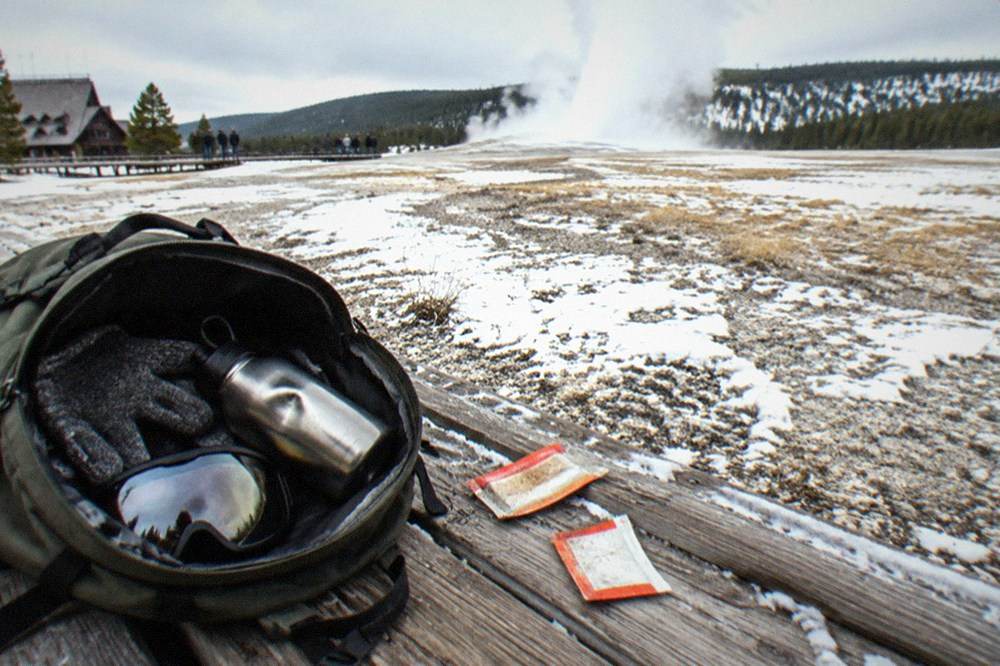
The phone deserves its own sentence, and then one more. Cold drains lithium batteries fast, sometimes within an hour of sub-zero exposure, so a phone riding in an outer jacket pocket on a moving sled can die before the first geyser stop. Keep it against a warm inner layer, carry a charged battery pack, and expect gaps in coverage across most of the winter interior regardless of bars on the screen at the trailhead. Tell someone your itinerary before pickup rather than planning to text from the road.
| Item | Why it earns its space |
|---|---|
| Chemical heat packs and hand warmers | Cheap, weightless, and the difference on a long cold stop |
| High-energy snacks | Full-day tours include lunch but riding burns fuel fast |
| Water bottle | Cold suppresses thirst, dehydration still happens |
| Sunscreen and sunglasses | Snow reflection at high elevation burns skin and eyes |
| Spare balaclava or neck gaiter | Wet face coverage is worse than none |
| Medications and phone battery pack | Cold kills batteries and vans leave early |
| Ski mask or helmet liner | Blocks the wind funnel inside a helmet at speed |
Sunscreen on a snowmobile tour surprises people until the first afternoon. Snow reflects sunlight upward off a landscape that holds it for months, and winter sun off fresh snow does real damage to uncovered faces in a few hours. Same logic for lip balm, which fits in any pocket. These are the items riders forget and then buy at markup, or go without.
For travelers who want the day-bag decision made in one place, the Old Faithful snowmobile tour from Jackson Hole is the listing that most rewards packing right, given its roughly 10 to 12 hour span from hotel pickup to return.
How Cold Does It Get On A Yellowstone Snowmobile Tour
Yellowstone winter daytime temperatures typically run zero to 20 degrees Fahrenheit, average highs reach 20 to 30 degrees, and average lows sit between zero and 9 degrees. Add wind chill from a sled moving down a groomed road and exposed skin chills far faster, which is why face coverage and warm pockets matter as much as the suit. The park's own materials describe daytime temperatures approaching 30 degrees with nighttime lows down to negative 30, and the record low at Riverside Ranger Station sits at negative 66 degrees. Most tour days land in the milder band of that range, but nobody knows which band until the morning of.
Wind chill is the multiplier nobody prices in. The National Park Service treats a moving snowmobile the way a cyclist knows a moving bicycle: the air you create is colder than the air standing still. A calm 15 degree morning becomes a much colder number at 30 miles per hour on the Lewis Canyon stretch south of Old Faithful. That is why the packing list leans on goggles, a balaclava, and a helmet liner rather than on a thicker jacket. Wind protection beats insulation for anything the helmet and windshield leave exposed.
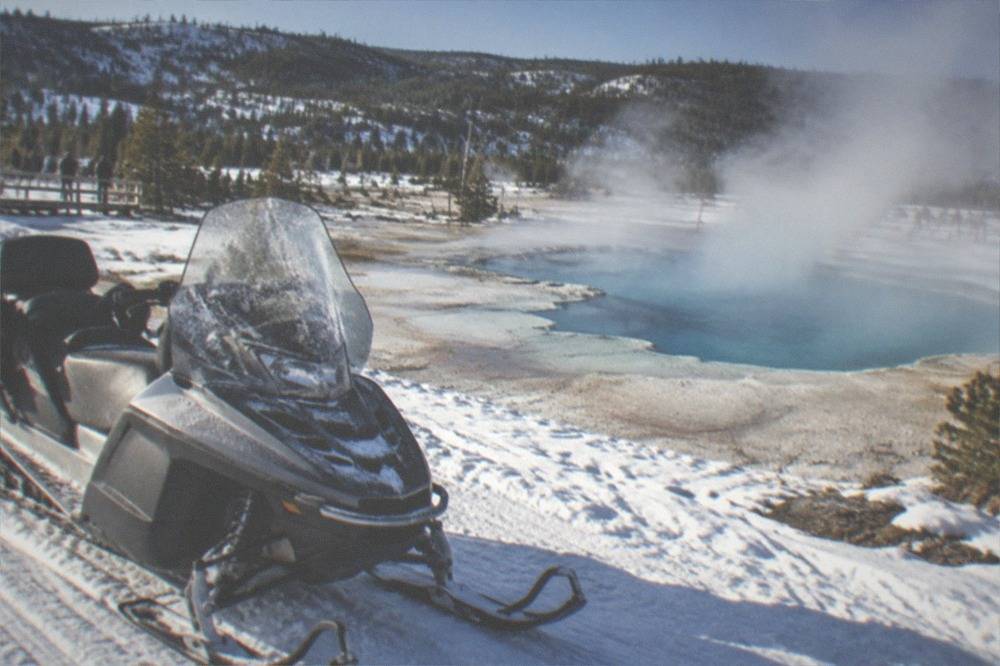
The same cold applies to the shorter rides near Yellowstone, and this matters if your itinerary mixes in-park and near-park days. The roughly three hour Bridger-Teton guided snowmobile tour out of the Heart Six Ranch area near Moran, rated 4.7 across 87 reviews and priced from $350, runs outside the park in the same mountain air. Riders on it need the identical base layers, wool socks, and face coverage as riders spending ten hours riding to Old Faithful. Cold does not check the park boundary, and the forest terrain around Buffalo Valley can hold it longer than the sun-exposed geyser basins do.
What Not To Bring On A Snowmobile Tour
Leave cotton clothing, open containers of alcohol, bulky ski equipment, and anything you cannot carry in one small backpack at the hotel. Alcohol rules on snowmobiles are strict: group leaders on non-commercial permits are limited to a 0.04 blood alcohol concentration, all other operators stay under 0.08, and open containers are prohibited on sleds. Commercial guided tours enforce comparable policies. The National Park Service treats snowmobiles as motor vehicles for impairment purposes, and tour operators, who hold the concession permits that let them operate inside the park at all, tend to be stricter than the written baseline because their permits depend on it.
The alcohol point deserves emphasis because a snowmobile tour is a celebration for a lot of groups, and winter in a mountain town invites a flask. Do not bring one. Beyond the rules, cold plus alcohol is a genuinely bad pairing on a sled: impairment aside, alcohol dilates surface blood vessels and accelerates heat loss, which works directly against everything in the rest of this packing list. Save it for the lodge.
The other common over-packing mistake is bulky gear. A full ski outfit, a giant camera bag, snowshoes for later, and a second pair of boots all fight for the same small storage space on a sled, and loose items on a moving machine are a hazard rather than a convenience. If you are carrying camera equipment for a trip that includes skiing or wildlife watching on other days, keep the snowmobile day's kit to one camera body and one lens in a closed case, per the tour's gear policy, or leave it in the van. Everything else rides in the pockets you can reach without dismounting.
One last simplification worth making. Full-day in-park tours include a meal stop in most listings, and the tours that provide outerwear also provide the safety equipment a guide is required to carry. So the honest final shape of the packing list is this: base and mid-layers, one pair of heavy wool socks, goggles, a balaclava, glove liners, a small bag of warmth and sun items, and documentation of any booking details. That is genuinely the whole job, and it fits in one small backpack with room left over.
Common Questions About Packing For A Yellowstone Snowmobile Tour
Yellowstone Snowmobile Tour Packing List
Base and mid-layers in wool or synthetic, one pair of heavy wool socks, goggles, a balaclava or neck gaiter, glove liners, a small backpack with chemical heat packs, hand warmers, sunscreen, lip balm, sunglasses, water, high-energy snacks, medications, and a phone plus battery pack kept warm. The operator supplies the snowmobile, helmet, insulated suit, and usually boots and mittens. Skip cotton, open alcohol containers, and anything too bulky to carry in one small bag.
Do I need to bring a helmet and snowmobile suit?
No. Guided snowmobile tours on these routes provide a full-face helmet and a two-piece insulated snowmobile suit as part of the listing, and many also supply snow boots with removable liners and leather mittens. What you bring is what goes underneath and alongside: base layer, mid-layer, socks, and personal items. Check your tour's live listing for the exact inclusions for the season you booked, since winter-only products occasionally adjust what is supplied.
What kind of socks and gloves work best?
One pair of heavy wool socks beats two thin pairs because double socks compress circulation inside a snow boot and leave toes colder. For hands, the layered approach works best: a thin synthetic or wool glove liner under the operator's leather mittens. The liner lets you handle a phone, a camera, or a zipper with some protection while keeping the warm outer layer for the ride. Chemical heat packs in mittens carry the coldest stretches.
Should I bring food and water on the tour?
Bring water and high-energy snacks even on tours that include lunch. Cold suppresses the sensation of thirst while riding still dehydrates you, and full days run roughly 10 to 12 hours door to door on the in-park routes. Trail mix, bars, and something with real calories carry the stretch between the lunch stop and the return leg. A bottle that does not leak in a backpack is worth testing before the morning of.
Is the park entrance fee included in the tour price?
It varies by listing. Snowmobile entry into Yellowstone carries a per-sled entrance fee, reported at $30 per snowmobile in operator materials referencing NPS fee schedules, and the [official Yellowstone fees page](https://www.nps.gov/yell/planyourvisit/fees.htm) is the authoritative source for current amounts. Some tours bundle it into the ticket and others collect it separately at the entrance, so confirm with your operator before the morning of the tour and carry a card or cash just in case.
Can I bring a backpack on the snowmobile?
Yes, a small one. Sleds have limited storage space, and tours typically run a support vehicle that carries extra gear, so a compact daypack with the essentials works fine. Keep it light and closed, and keep the items you will actually want on the ride, hand warmers, snacks, a camera, in jacket pockets rather than buried in the bag. Loose items on a moving sled are a hazard, so secure anything you bring.