West Yellowstone Snowmobile Trail Conditions: How To Read Snow Reports, Grooming Updates, And Season Timing
Trail conditions around West Yellowstone decide almost everything about a winter sled trip: which trails are open, how deep the snow sits, whether the park interior is reachable, and what a guide does when the weather turns. Here is how to read the reports before you book.
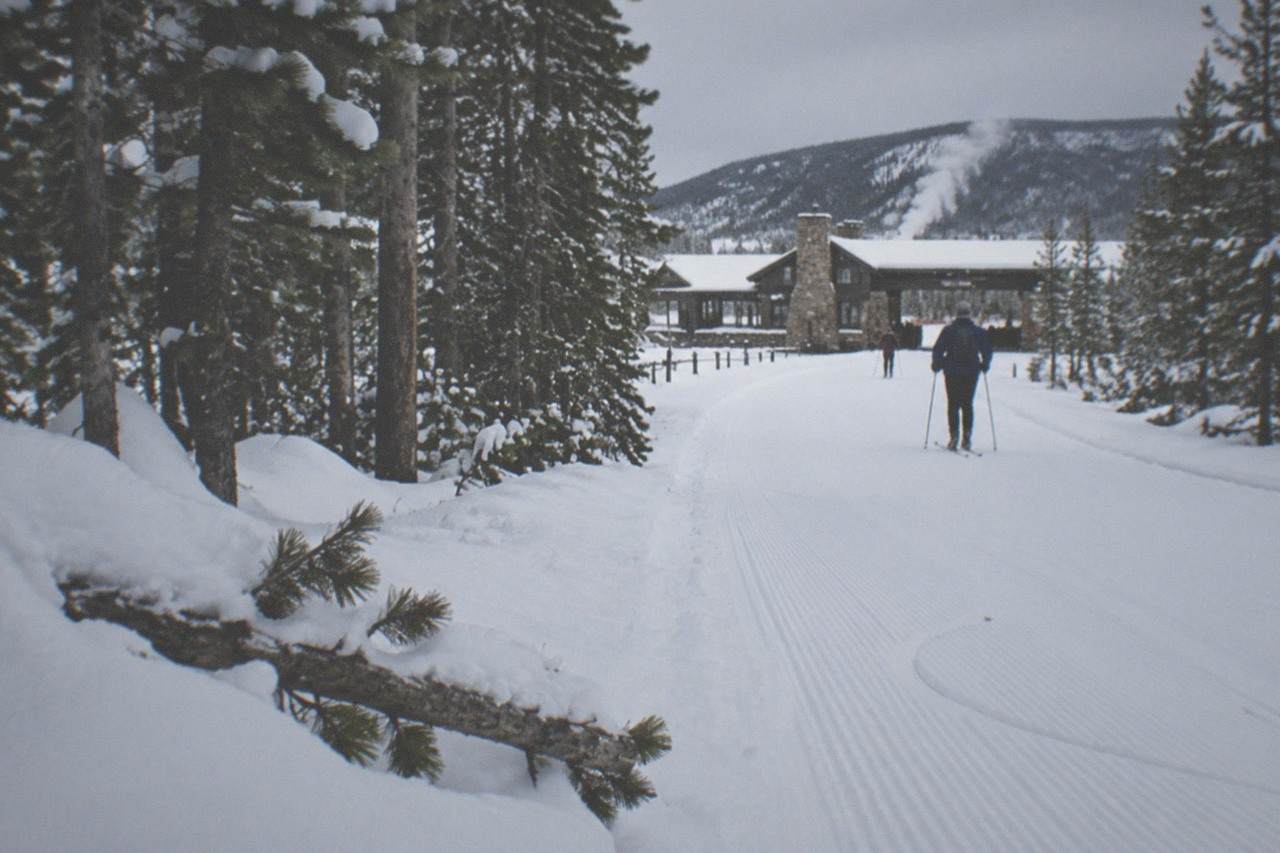
Short answer
West Yellowstone snowmobile trail conditions are driven by snowpack, daily grooming, and NPS road status. The oversnow season typically runs mid-December to mid-March, with the 2026-27 window projected as December 15, 2026 to March 15, 2027. Check live snowpack data, grooming reports, and the NPS road status page before booking a guided tour or rental.
How Do You Check West Yellowstone Snowmobile Trail Conditions Before Your Trip?
Trail conditions around West Yellowstone are a moving target, and the useful check is a three-layer read: snowpack depth at the local SNOTEL station, daily grooming reports for the forest trail system, and the National Park Service road status page for anything inside Yellowstone. Reading all three before you book a guided snowmobile tour tells you whether the season has started on time, whether the base is healthy, and which routes a guide can actually reach that week. Once you know the trails are in shape, the next question is whether to rent a machine on your own or go out with a guide, and our breakdown of guided snowmobile trips versus renting in West Yellowstone makes the case for the latter.
West Yellowstone sits at the western edge of the park, ringed by groomed routes through the Custer Gallatin National Forest and connected to the park's interior roads through the West Entrance. Conditions on those two systems are not the same thing. Forest trails outside the park groom independently of the National Park Service, and a rental customer riding the Two Top area can be on excellent snow the same morning a park interior route is closed for avalanche control or thin cover. The town's reputation as a sledding hub exists precisely because both systems usually work at once, but "usually" is the operative word, and the difference matters for anyone planning around a specific week. Before you can compare either system's reports, you first have to reach town, which starts with getting to West Yellowstone when snow closes the usual roads.
The reason conditions dominate planning here is simple: snow depth is the gate for everything. In mid-to-late September, the West Yellowstone SNOTEL station at roughly 6,700 feet of elevation reads zero inches of snow depth, which is normal for the date and says nothing about the coming season. By mid-December, the same station is the first indicator of whether groomers can start packing base layers and whether the park can open interior roads to oversnow travel on schedule. A late-accumulating season pushes everything later, and the operators and shops in town adjust their opening days accordingly.
If you are planning a trip and want the surrounding context of what the town itself offers as a base, the companion guide on Yellowstone Snowmobile Tours covers West Yellowstone as a departure hub in more depth, including where the trail systems sit relative to town.
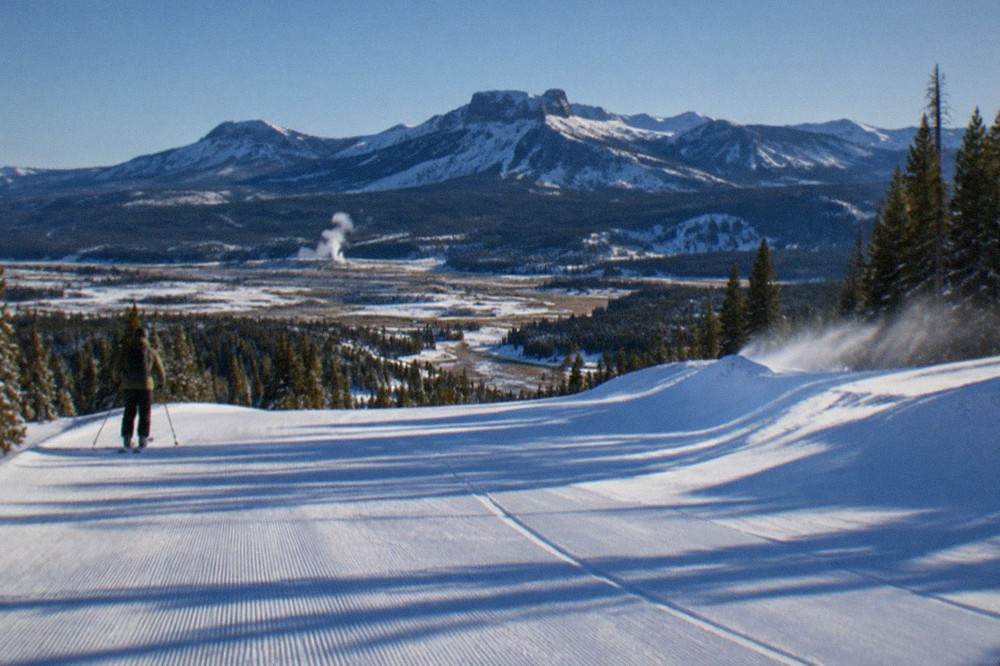
Which Sources Report Live Snow And Grooming Updates For West Yellowstone?
Three source types matter: SNOTEL snowpack stations for depth and snow-water equivalent, local grooming reports for the forest trail system around town, and the official NPS road status page for the park's interior. Operator listings add a fourth practical layer, because guides post season-opening dates and condition notes on their own pages. Checking all four takes about ten minutes and beats any single weather app.
The snowpack layer comes from the SNOTEL network, automated mountain stations that report snow depth and snow-water equivalent daily. The West Yellowstone station is the one to watch for this region. In mid-to-late September it read zero inches of depth, essentially 0 percent of normal, which is seasonally expected. That number is the baseline for the season to come: when the station starts climbing in November and December, groomers and park staff are reading it too. SNOFLO and other NRCS-linked report sites surface the same station data in friendlier form.
Grooming reports are the second layer, and they are the most local of all. The trails outside the park, the Rendezvous trail system and the forest routes towards Two Top and the Idaho line, are packed by local grooming programs, and their condition reports change daily or every few days. If the question is "can I ride from town this weekend," a grooming report answers it far better than a snowfall total, because grooming state, soft, freshly packed, rutted, or closed, is what your sled actually feels under the track.
The third layer is the National Park Service. The park's road status page is the authoritative word on whether the West Entrance road, the route to Old Faithful, and the Madison-to-Canyon segments are open to oversnow travel on any given day, and the NPS park roads page is where seasonal opening and staggered closing dates are published. For the 2026-27 season the projected oversnow window runs December 15, 2026 to March 15, 2027, with some segments closing earlier in March. Those dates are projections, weather-dependent, and worth rechecking before you lock flights.
| Source | What it tells you | How often it changes |
|---|---|---|
| West Yellowstone SNOTEL station | Snow depth and snow-water equivalent at ~6,700 ft | Daily |
| Local grooming reports (forest trails) | Whether trails near town are packed, soft, or closed | Daily to weekly |
| NPS park road status page | Interior road openings, closures, season dates | As conditions change |
| Operator listings | Season start dates, pickup logistics, condition notes | Seasonally to weekly |
A practical reading order for a trip planner: check the season window first, then the SNOTEL depth trend, then grooming, then the operator's own listing. If you are deciding between an in-park guided tour and a rental for forest trails, the guides on snowmobile rentals in West Yellowstone and on Yellowstone snowmobile season dates break those two tracks down separately, and both decisions hinge on the same condition reports.
For riders weighing the in-park option specifically, the current bookable roster is thin on West Yellowstone departures: the in-park snowmobile and snowcoach tours that this site lists actually depart with hotel pickup in the Jackson, Wyoming area and enter via the South Entrance. The trio below shows the park-interior options alongside a Jackson Hole forest alternative.
How Do Trail Conditions Outside The Park Differ From Roads Inside Yellowstone?
Outside the park, around West Yellowstone and in the surrounding national forest, trail conditions are a grooming and snowpack question: trails open when there is enough base to pack, and close when grooming stops in spring. Inside Yellowstone, conditions are a regulation question layered on snow: interior roads open to oversnow travel only, on a fixed mid-December to mid-March window, and only for guided or permitted trips. The same storm can improve one and close the other.
The forest side is straightforward sledding logic. More snow means better trails, and the groomed network around West Yellowstone, the same system that supports the town's rental market, runs on local grooming programs that need a workable base before they start and stop when the snow rots out in spring. A rider on a rental can head out on the morning a report looks good, with no entrance procedure beyond the trailhead parking.
The park side is a different machine. Most park roads close to regular automobiles in early November, and once enough snow accumulates, usually by mid-December, they open to oversnow travel only: commercially guided snowmobiles, snowcoaches, or the small lottery-based Non-Commercially Guided Snowmobile Access Program. Unguided snowmobile access is prohibited, a rule that has been in force since the 2013 Winter Use Rule and remains unchanged for the 2026-27 season. Snow depth alone does not get a private sled through the West Entrance; an authorized commercial guide or an NCGSAP permit does.
That regulatory wall is why "trail conditions" means two different research tasks. For forest riding near West Yellowstone, you are watching grooming reports. For the park interior, Old Faithful, the Grand Canyon of the Yellowstone, the geyser basins, you are watching the NPS road status page and an operator's calendar, because a guided snowmobile tour is the primary way most winter visitors reach those sights. The distinction is laid out in more depth in the guide on guided versus self-guided Yellowstone snowmobile tours.
Weather can split the two systems in either direction. A heavy, warm storm can dump great base on forest trails while triggering avalanche closures on the park's East Entrance road over Sylvan Pass, which the NPS notes may close for hours or even days at a time due to avalanche danger. Conversely, a cold dry stretch can leave thin cover on wind-scoured forest trail while the park's groomed roadbeds hold their packed snow longer, because they are maintained to a road standard rather than a trail standard.
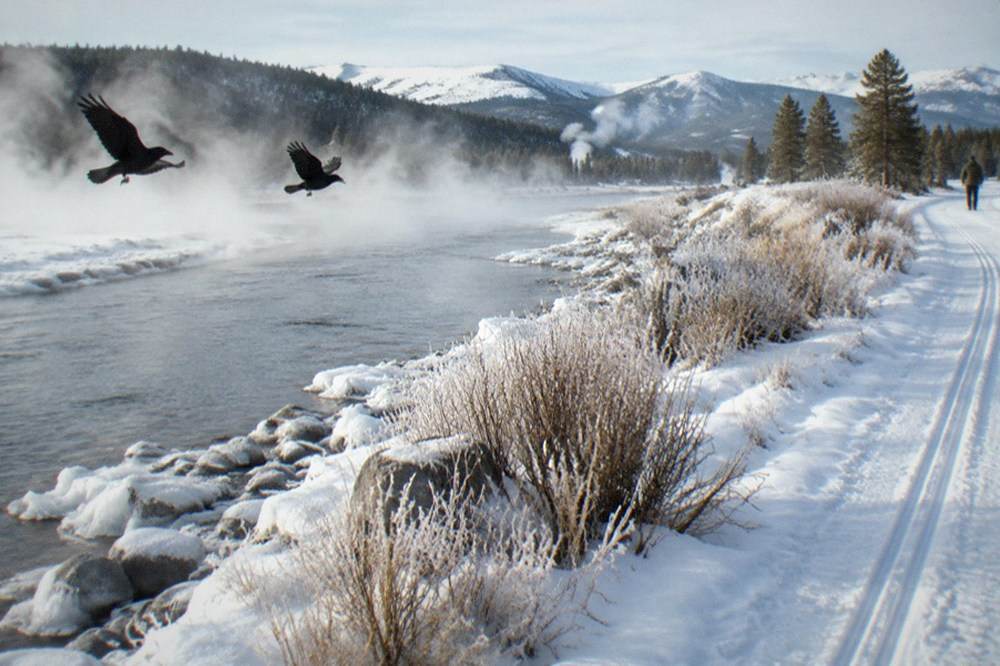
When Do West Yellowstone Trails Open And Close For The Winter Season?
The oversnow season for Yellowstone's interior roads typically runs mid-December to mid-March; for 2026-27 the projected window is December 15, 2026 to March 15, 2027, with staggered earlier closures on several interior segments beginning March 7. Forest trails around West Yellowstone open on their own grooming schedules, usually once the base is deep enough, and town rental shops align their calendars to both.
The park's dates deserve precision because they are staggered, not uniform. Under the published projections, the Mammoth Hot Springs to Norris segment closes the evening of March 7, 2027; Norris to Madison, Norris to Canyon Village, and Canyon Village to Washburn Hot Springs Overlook close March 9; Canyon Village to Fishing Bridge closes March 14; and the West, South, and East entrances plus all remaining groomed roads close March 15. Only the North Entrance to Northeast Entrance road, Gardiner through Lamar Valley to Cooke City, stays open to regular vehicles year-round. If your trip lands in the second week of March, the specific segment you hoped to ride may already be shut while others are still open.
Forest trails follow snow rather than a calendar. Grooming programs around West Yellowstone typically begin once early-season storms build a base and wind down in late March or early April as the snow deteriorates. Rental shops in town publish their own opening dates, and those dates flex with the same SNOTEL readings discussed earlier. A season that opens on time in mid-December usually means the full rental fleet is out by the holidays, historically the most in-demand stretch of the winter.
One planning note worth flagging: the 2026-27 season dates are projections, and NPS explicitly ties exact dates to snowpack. The standing rule on the park's own pages is the mid-December to mid-March window, and the specific December 15 to March 15 dates for this season come from the NPS road pages and the recreation.gov permit listing, both subject to weather. Do not build a non-refundable itinerary around a single opening day without checking the live road status page closer to travel.
| Period | Park interior roads | Forest trails near West Yellowstone |
|---|---|---|
| Early November | Closed to regular automobiles | Ungroomed, thin cover |
| Mid-December | Oversnow travel opens (projected Dec 15, 2026) | Grooming typically underway |
| January to February | Full oversnow season | Full grooming season |
| Early March | Staggered closures begin March 7-9 | Still rideable, softening |
| Mid-March | All oversnow roads close March 15 | Grooming winds down late March |
The projected stagger is the detail most first-time planners miss. A March 10 trip to Old Faithful is fine on the West Entrance road; a March 10 trip hoping to ride the Mammoth-to-Norris segment is not. The season-dates guide carries the fuller breakdown if you are choosing between a February and a March week.
How Do Tour Operators Read Conditions And Adjust Their Tours?
Operators make go or no-go calls on four inputs: the NPS road status for interior routes, the daily avalanche and weather forecast, their own guide reports from the previous day, and the machine and gear readiness for the cold. On a bad-weather day a guide may reroute, shorten stops, or cancel outright; on a thin-snow opening week a season may start late. Booking a tour means accepting that the route can flex with the day.
The commercial tours that enter Yellowstone's interior run under concessioner permits, and their equipment is NPS-compliant by definition: every sled in a commercial fleet meets the park's Best Available Technology standards for sound and emissions, so riders are never personally responsible for machine compliance on a guided trip. That is one of the quieter advantages of the guided product for condition-worried planners, since the operator absorbs the regulatory and mechanical layer entirely.
Practically, the day starts early. Jackson-area departures for in-park tours typically involve hotel pickup around 6:00 to 7:30 a.m., a van run to the South Entrance, outfitting with suits and helmets, and sleds on the trail by roughly 8:00 to 9:30 a.m. Guides are watching conditions the whole way, and the itinerary flexes around wildlife, weather, and geyser timing rather than a fixed clock. Tours commonly build in stops at Moose Falls, Lewis Canyon, West Thumb Geyser Basin, and the Fountain Paint Pots, but the operator's listing describes the day as condition-dependent, and that phrasing is honest.
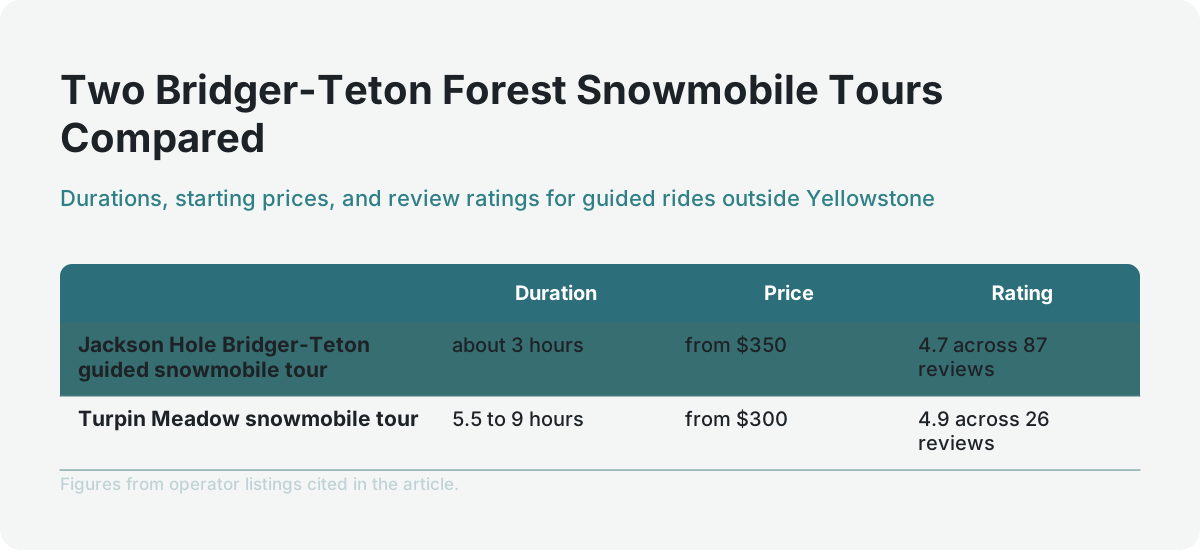
For riders who want sled time without depending on park road status at all, the Jackson Hole side of the region runs on forest trails in the Bridger-Teton National Forest, outside Yellowstone entirely. A shorter option there is the Jackson Hole Bridger-Teton guided snowmobile tour, about 3 hours, rated 4.7 across 87 reviews, from $350, meeting at the Heart Six Ranch lodge or Buffalo Valley Cafe in winter. Because it never enters the park, its condition risk profile is simpler: no entrance procedure, no park road status, just forest trail conditions.
For groups wanting a longer day outside the park, the Turpin Meadow snowmobile tour runs 5.5 to 9 hours in the same Bridger-Teton country, rated 4.9 across 26 reviews, from $300, meeting in the Turpin Meadow area near Moran. It suits planners who care more about deep-snow riding than sightseeing, and again, it is a Jackson Hole forest trip, not a Yellowstone interior one.
The two product families answer different condition anxieties. If your worry is "will the park be open and will I see the geysers," the in-park guided tours are the answer, and their risk is the park road calendar. If your worry is "will there be rideable snow at all," the forest tours have a longer usable window and no dependence on the oversnow season's exact edges.
What Happens When Conditions Turn Bad: Storms, Wind, And Closures?
Bad conditions around West Yellowstone show up as storms that close roads, wind that drops wind chill to dangerous levels, avalanche danger on the East Entrance's Sylvan Pass, and early or late season windows when snowpack simply is not there yet. Operators respond by rerouting, delaying starts, or cancelling with refund policies set in their listing terms; the NPS responds by closing road segments, sometimes for days.
The temperature picture explains why wind matters as much as snowfall. Winter daytime temperatures in the park run roughly 0°F to 20°F, with sub-zero readings common at night and at higher elevations, and average winter lows recorded between 0°F and 9°F. At those baselines, any moving-sled wind chill bites fast, and NPS winter safety guidance stresses windproof outer layers, no cotton, and full face coverage. A calm 15°F day is a pleasant ride; the same day with a 25 mph headwind is a different trip, and guides weigh that openly.
Avalanche danger is the East Entrance's specific problem. The road over Sylvan Pass may close temporarily due to avalanche danger or control work, sometimes for hours or days, and the recreation.gov permit information notes plainly that there are no refunds or rescheduling for weather or closures in the non-commercial program. Commercial tours carry their own terms, spelled out on the operator's live listing. For West Yellowstone and South Entrance itineraries, Sylvan Pass is not on the route, so the more common bad-day scenarios there are heavy snowfall slowing travel and wildlife on the roadbed.
Cell coverage is the quiet condition factor planners underestimate. It is unreliable or absent across much of the park in winter, cold drains batteries quickly, and NPS guidance says not to rely on a phone for emergencies. Guided tours mitigate this with radio-equipped guides and support vehicles; solo riders on rentals near town should carry the NPS-recommended kit, which for independent travel includes extra food and water, a shovel, first aid, heat packs, and fire-starting supplies, on the theory that you may wait out weather rather than outrun it.
One more seasonal reality: recent mild winters have caused late openings and early closures on some routes, per the permit program's own notes. That is exactly why the "check the live road status page" habit is worth building into your planning rather than treating December 15 as a guarantee.
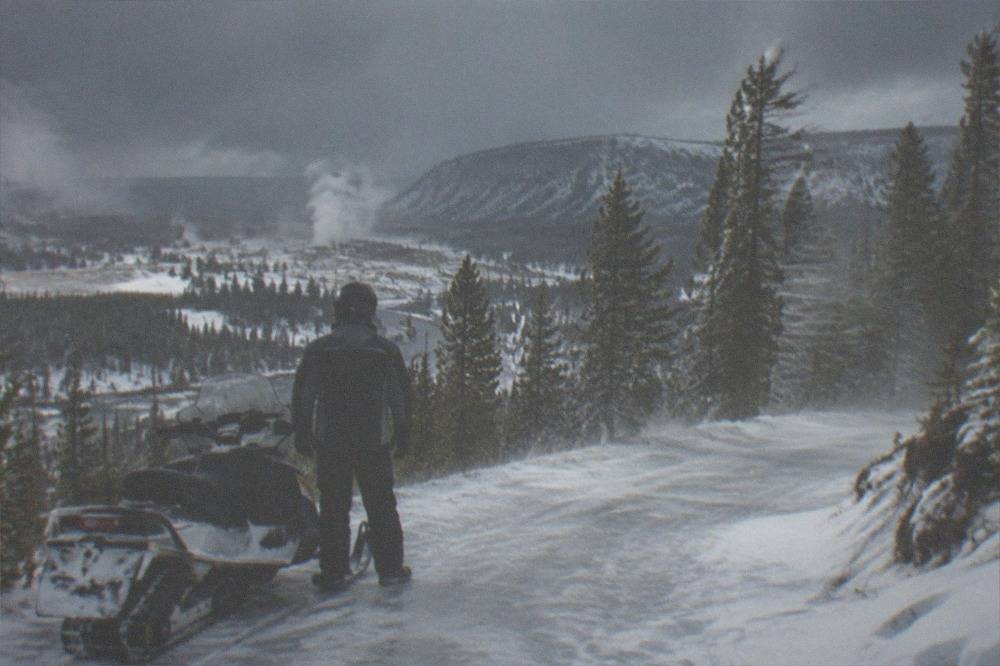
Which Tours Fit Which Conditions You Might Meet?
Match the product to your condition risk: the in-park tours from the Jackson area fit planners who want the interior sights and accept the park's oversnow calendar; the snowcoach option trades handlebars for a heated cabin on the same roads; and the Jackson Hole forest tours ride regardless of park road status. Price-wise the listed in-park snowmobile tour runs from $475 and the snowcoach from $450, while forest tours start lower, from $300.
The flagship interior product is the Yellowstone Old Faithful full-day snowmobile tour, roughly 10 to 12 hours, rated 4.6 across 338 reviews, from $475, with hotel pickup in the Jackson area. It is the strongest-condition pick of the in-park options in one specific sense: with 338 reviews behind it, its rating rests on a large pool, and its calendar track record is well documented. On thin-snow or early-season weeks, the operator's listing is where current availability is confirmed, since winter-only products can sit quiet in the off-season booking window.
The heated-cabin alternative is the Yellowstone Old Faithful snowcoach tour from Jackson Hole, about 12 hours, rated 4.8 across 227 reviews, from $450, meeting at Jackson Hole or Teton Village hotels or at 1255 US-89 in Jackson. For travelers whose main condition worry is cold rather than snow depth, it covers the same road system to Old Faithful without the wind chill. Both this and the Grand Canyon snowmobile sibling have shown availability uncertainty on recent listing checks, so confirm current status on the live listing before building an itinerary around them.
The Grand Canyon of the Yellowstone full-day snowmobile tour, about 12 hours with a 4.4 rating across 13 reviews, has no published starting price. It is the interior pick for waterfall and canyon-country planners, with the same caveat: check current availability, as winter-only listings can show as paused in the September off-season.
| Tour | Where it rides | Length | Rating and reviews | Price |
|---|---|---|---|---|
| Old Faithful full-day snowmobile | Inside Yellowstone, Jackson pickup | 10-12 hours | 4.6 from 338 reviews | From $475 |
| Old Faithful snowcoach | Inside Yellowstone, Jackson pickup | ~12 hours | 4.8 from 227 reviews | From $450 |
| Grand Canyon snowmobile | Inside Yellowstone, Jackson pickup | ~12 hours | 4.4 stars, 13 reviews | Not published |
| Bridger-Teton guided tour | Outside the park, Jackson Hole | ~3 hours | 4.7 from 87 reviews | From $350 |
| Turpin Meadow tour | Outside the park, Jackson Hole | 5.5-9 hours | 4.9 from 26 reviews | From $300 |
The winter entrance-fee layer sits on top of whichever product you pick. A standard 7-day vehicle pass runs $35, a snowmobile pass is $30 per sled, and non-US residents aged 16 and over pay an additional $100 per person unless they hold a qualifying pass, per the park's fees page. Guided tour pricing sometimes bundles or itemizes these differently, so read the listing's inclusions line rather than assuming.
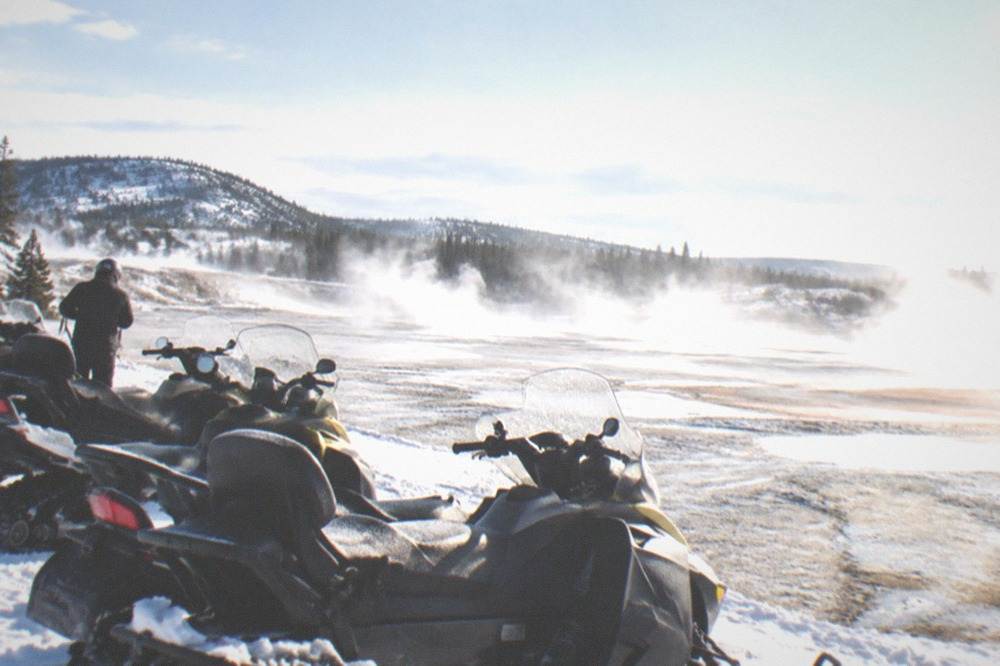
If your dates are flexible enough to chase the best conditions rather than the best holiday week, the best month to snowmobile in Yellowstone guide covers the trade-offs, and the half-day versus full-day comparison is worth a read if a short forest tour might substitute for a long park day on a marginal-weather week.
For a fuller picture of the planning stack, from flights and driving to gateway-town trade-offs, the getting to West Yellowstone in winter guide covers the Bozeman and Jackson Hole airport routes and their winter drive realities, roughly 90 miles and 1.75 to 2 hours from Bozeman in good conditions, longer when the canyon road is icy. Getting yourself to the trailhead in bad weather is a condition factor too, arguably the one most planners underweight. If that canyon stretch worries you, the Bozeman to West Yellowstone winter driving guide explains what icy conditions on that road actually look like and how to time the trip.
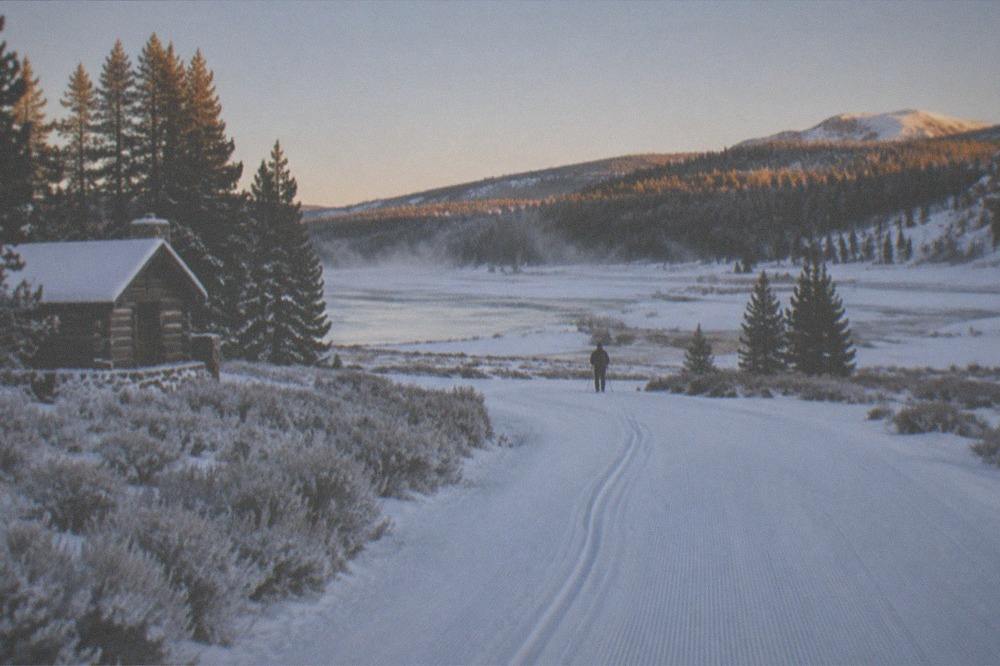
Before the final questions, the selection band below restates the three tours this site would put in front of a conditions-focused planner: the park-interior snowmobile tour, its canyon sibling, and the Jackson Hole forest option for the weeks when park access is the uncertainty.
Common Questions About West Yellowstone Snowmobile Trail Conditions
When do West Yellowstone snowmobile trails open for the season?
The park's interior oversnow season typically opens mid-December; for 2026-27 the projected opening is December 15, 2026. Forest trails around West Yellowstone open on local grooming schedules once snowpack builds, usually on a similar timeline. Check the NPS road status page and local grooming reports for the current season's actual dates, since openings are weather-dependent.
Can I ride a snowmobile in Yellowstone without a guide?
No. Unguided snowmobile access inside Yellowstone is prohibited. Riding requires either a commercially guided tour or a permit through the Non-Commercially Guided Snowmobile Access Program, a lottery-based system allowing up to four small groups per day. Rentals around West Yellowstone are for forest trails outside the park, not the interior roads.
How much snow does West Yellowstone need before trails open?
There is no single published depth threshold, but grooming programs need a workable base before packing begins, and the park needs enough accumulation before interior roads convert to oversnow travel, usually by mid-December. The West Yellowstone SNOTEL station's snow-depth trend through November and December is the best early indicator.
Where can I find live trail condition reports?
Check the West Yellowstone SNOTEL station data for snowpack, local grooming reports for forest trails near town, and the NPS park road status page for interior roads. Operator listings add practical season-opening notes and pickup logistics. The NPS road page is the authoritative source for anything inside the park.
What happens if a storm closes trails on my tour day?
Operators reroute, delay, or cancel based on NPS road status and their own safety calls, with refund and reschedule terms set in the listing. The East Entrance road over Sylvan Pass can close for hours or days due to avalanche danger. West Entrance and South Entrance itineraries are more often affected by heavy snowfall slowing travel than by full closures.
Do trail conditions differ between West Yellowstone and Jackson Hole?
Both regions depend on snowpack, but they access different systems. West Yellowstone sits beside forest trails and the park's West Entrance roads; Jackson Hole tours ride Bridger-Teton National Forest trails outside the park, while the in-park tours this site lists depart from the Jackson area via the South Entrance. Conditions can differ between the two on the same day.